
Concept Phase in Power Electronics: Where EMC, Thermal, and Control Issues Really Arise
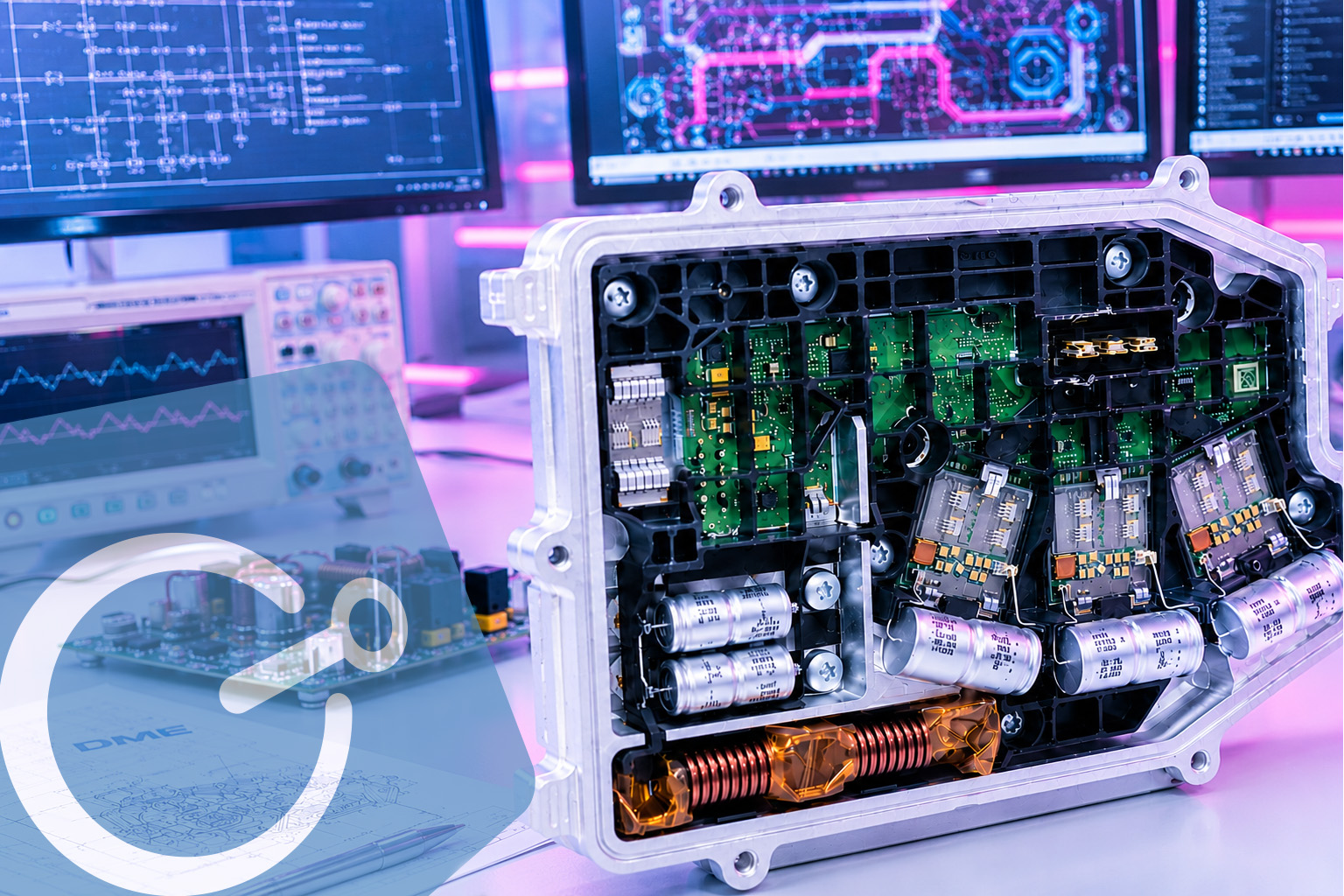
Many errors in electronics projects only become apparent at the prototype stage: unexpected hotspots, overshoots at the switch node, unstable gate signals, EMC anomalies, thermal derating, or a control behavior that works in the lab but does not remain robust in the real load collective.
The cause often lies not in the detailed design, but much earlier: in assumptions made during the concept phase.
Especially in power applications, sizing for a stationary nominal operating point is rarely sufficient. Switching events, load jumps, recuperation, short-term overload, PWM strategy, thermal impedances, aging, cooling paths, and worst-case tolerances often have a greater impact on later robustness than the nominal operating point.
Parasitic effects are similarly critical. Commutation loops, trace and bonding inductances, intermediate circuit impedances, current feedback, gate resistors, measurement grounds, and capacitive couplings are only partially visible in the schematic. However, they become system-defining in the layout, EMC testing, and thermal behavior.
At Control Motion Electronics in Dortmund, we therefore consider these relationships not only in the prototype stage. In development projects for power electronics, drive electronics, motor control, and thermally demanding assemblies, system architecture, circuit design, PCB layout, embedded software, thermal management, EMC, and manufacturability are evaluated together early on.
This includes, depending on the project:
- System, circuit, power loss, and thermal simulations
- Consideration of transient operating states and worst cases
- Thermal 3D FEM analyses and Rth/Zth evaluations
- EMC-compliant circuit and layout design
- DfM coordination with a view to later EMS manufacturing
- Test strategy, verification, and series validation
The crucial point is not to generate as many models as possible. What is essential is to make the right assumptions verifiable early on.
For what is simplified in the concept phase often becomes a fixed boundary condition later: for the layout, cooling, mechanics, firmware, testability, and series transition.
Prototypes remain necessary. But they should validate hypotheses – not reveal fundamental system risks for the first time.
#PowerElectronics #ElectronicsDevelopment #MotorControl #EMC #ThermalManagement #EmbeddedSystems #PCBDesign #EMS #Dortmund